
Premium Tanpa Pengeluaran Berlebihan
Premium Tanpa Pengeluaran Berlebihan
Paket parfum premium bukanlah sekadar gabungan dari versi termahal dari setiap komponennya. Ini adalah alokasi uang, risiko, dan perhatian yang disengaja terhadap beberapa keputusan yang membuat merek tersebut terasa tak tertandingi.
Perusahaan parfum anonim di balik kerangka proyek ini hadir dengan ambisi yang sudah biasa: botol yang terasa kokoh di rak toko, terlihat bagus dalam foto, memberikan kesan pertama yang percaya diri, dan mendukung posisi harga mewah yang kredibel. Spesifikasi awalnya juga seperti katalog kustomisasi—geometri kaca baru, tutup logam, pompa dan kerah khusus, dekorasi berlapis, kotak presentasi yang kokoh, dan sisipan yang pas. Setiap poin terdengar premium jika dipertimbangkan secara terpisah.
Persyaratan komersialnya kurang fleksibel. Pesanan pertama harus memperhatikan target kuantitas dan kisaran harga yang belum dikonfirmasi, kalender peluncuran tidak dapat menampung putaran pengembangan yang tidak terbatas, dan merek tersebut membutuhkan solusi yang dapat dipesan ulang seiring pertumbuhan permintaan. Setiap komponen eksklusif akan menciptakan perkakasnya sendiri, pesanan minimum, siklus sampel, ketergantungan pemasok, dan profil persediaan sisa. Oleh karena itu, pertanyaannya berubah dari "Bisakah setiap bagian dikustomisasi?" menjadi "Keputusan kustomisasi mana yang sebenarnya akan dihargai oleh konsumen?"
Peran DAXIN dalam jenis peninjauan ini bukanlah untuk menghilangkan ambisi dari proyek tersebut. Melainkan untuk melindungi ide merek sekaligus mengungkap konsekuensi komersial yang tersembunyi di dalam hasil akhir. Itu berarti membandingkan botol yang sudah ada dengan cetakan baru, menguji apakah dekorasi dapat membawa identitas merek, memutuskan apakah sentuhan pada tutup botol layak mendapatkan alokasi anggaran yang lebih besar, menstandarisasi antarmuka fungsional jika sesuai, dan menilai harga melalui keseluruhan proses, bukan hanya harga per komponen.
Narasi di bawah ini adalah model pengambilan keputusan yang masih menunggu konfirmasi proyek internal. Narasi ini sengaja menghindari detail pelanggan yang tepat, penghematan, jumlah pesanan minimum (MOQ), waktu tunggu, dan klaim kinerja. Nilainya terletak pada metodenya: permintaan pelanggan → biaya, MOQ, dan implikasi risiko → alternatif realistis → keputusan desain → dampak konsumen → dampak komersial.

Lebih banyak kustomisasi tidak secara otomatis berarti lebih premium. Itu berarti lebih banyak komitmen. Merek harus memutuskan komitmen mana yang menciptakan nilai nyata.
Prinsip rekayasa nilai utama
01 · Ringkasan
“Kami ingin tampilannya mewah—tetapi angka-angkanya tetap harus masuk akal”
Kemasan yang diinginkan membutuhkan disiplin visual dari peluncuran parfum premium: siluet yang percaya diri, kejernihan kaca yang terkontrol, tutup yang terasa disengaja, detail metalik yang presisi, dan kemasan luar yang tidak merusak botol di saat-saat terakhir. Target pasar, saluran distribusi, dan konteks ritel akhir tetap sama.[CEK FAKTA / DAXIN UNTUK MENGKONFIRMASI]Namun, ketegangan yang mendasarinya sama bagi para pendiri, pengembang produk, dan tim pengadaan: desain dinilai oleh konsumen sementara proses menuju desain dibatasi oleh volume, uang, waktu, dan pasokan.
Oleh karena itu, kemasan premium merupakan keputusan bisnis sebelum menjadi sekadar latihan penataan gaya. Botol eksklusif dapat menciptakan pengenalan yang kuat di rak toko, tetapi juga memusatkan anggaran pada wadah kaca dan meminta perkiraan untuk mendukung pilihan tersebut. Tutup zamac dapat menciptakan kesan fisik yang langsung terasa, tetapi mengubah biaya komponen, berat pengiriman, dan ukuran komitmen inventaris. Kotak yang kokoh dapat menampilkan tampilan yang mengesankan, tetapi juga dapat meningkatkan berat dimensi dan memakan ruang penyimpanan. Tidak satu pun dari pilihan ini yang salah. Masing-masing membutuhkan alasan yang terkait dengan posisi merek.
Tinjauan dimulai dengan memisahkan persyaratan menjadi tiga kelompok.Sinyal merek yang tidak dapat dinegosiasikanAspek-aspek tersebut perlu terlihat atau terasa berbeda.Persyaratan fungsionalMencakup kinerja penyemprotan, kesesuaian penutup, perakitan, dan perlindungan.kendala komersialAnggaran proyek yang komprehensif, persyaratan minimum tingkat komponen, waktu peluncuran, koordinasi pemasok, dan kelayakan pesanan berulang. Sebuah proposal akan dinilai berdasarkan ketiga kelompok tersebut, bukan hanya keindahannya saja.
02 · Kesalahan Pertama
Memperlakukan setiap komponen sebagai peluang untuk melakukan kustomisasi.
Kemasan parfum tampak sederhana saat dirakit. Namun, di balik tutupnya, terdapat tumpukan keputusan: badan dan leher botol kaca, pompa, tabung celup, kerah, cangkang tutup dan sisipan, dekorasi permukaan, karton, dan perlengkapan internal. Jika setiap elemen menjadi hak milik, jumlah hubungan akan bertambah lebih cepat daripada jumlah bagian yang terlihat. Tutup khusus harus sesuai dengan kerah yang dipilih. Kerah harus sesuai dengan tinggi pompa yang terpasang. Pompa harus sesuai dengan leher botol dan pengiriman wewangian. Botol yang didekorasi harus tahan terhadap sisipan dan kemasan pengiriman tanpa mengalami abrasi.
Kustomisasi juga menciptakan antarmuka administratif. Komponen baru dapat berarti gambar lain, keputusan kepemilikan alat, master fisik, persetujuan warna, pesanan pembelian, standar inspeksi, dan waktu tunggu pemesanan ulang. Komponen yang tampak murah dalam penawaran harga dapat menjadi mahal untuk dikoordinasikan jika berasal dari pemasok terpisah, memiliki ukuran batch yang tidak fleksibel, atau menciptakan operasi perakitan yang tidak dimiliki oleh siapa pun.
Oleh karena itu, koreksi pertama bersifat konseptual: berhentilah menyamakan jumlah komponen pesanan khusus dengan kemewahan. Konsumen tidak memeriksa daftar material. Mereka merasakan proporsi, keseimbangan, hasil akhir, sentuhan, semprotan, dan urutan pembukaan. Proyek seharusnya kompleks hanya jika kompleksitas tersebut mengubah pengalaman atau melindungi kinerja.
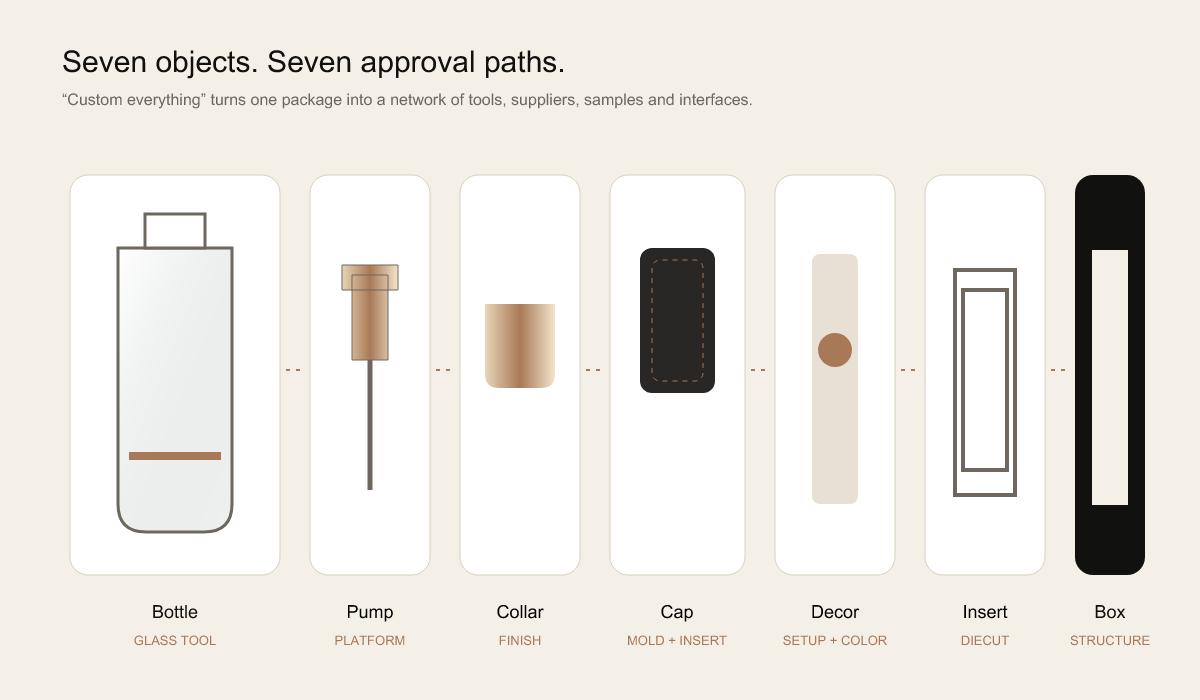
Semua harus disesuaikan, dijelaskan secara detail.Tujuh objek yang terlihat dapat menciptakan tujuh jalur pembuatan perkakas, sampel, jumlah pesanan minimum (MOQ), dan persetujuan sebelum kompatibilitas di antara mereka dipertimbangkan. Diagram teknis SVG.
03 · Metode
Rekayasa nilai bukan berarti membuat paket menjadi lebih murah.
Dalam kemasan parfum premium, rekayasa nilai berarti mempertahankan karakteristik yang dapat dilihat, disentuh, dan dikaitkan pelanggan dengan merek, sambil menyederhanakan atau menstandarisasi elemen-elemen yang biaya tambahannya tidak menciptakan nilai konsumen yang proporsional. Ini bukan perlombaan menuju spesifikasi terendah. Botol yang tipis dan tidak stabil atau aktuator yang lemah akan mengurangi nilai meskipun menurunkan harga. Begitu pula dengan lapisan akhir yang terlihat buruk dalam foto, tutup yang berbunyi, atau karton yang mudah rusak di toko.
Metode ini mengajukan dua pertanyaan yang saling berkaitan. Pertama,Apa yang menciptakan nilai yang dirasakan?Ini dapat mencakup siluet, distribusi kaca, sensasi tutup, hasil akhir, presisi logo, dan pengalaman membuka. Kedua,Apa yang melindungi nilai yang telah diberikan?Ini termasuk leher botol, dosis pompa, antarmuka penyegelan, daya rekat dekorasi, penyangga sisipan, dan kualitas yang dapat diulang. Beberapa elemen termasuk dalam kedua kelompok; yang lain penting secara komersial justru karena konsumen tidak pernah menyadarinya saat berfungsi.
Suatu komponen lolos tinjauan rekayasa nilai ketika manfaat desain, kegunaan di masa depan, dan kepemilikan merek membenarkan pembuatan alat, jumlah minimum, pengambilan sampel, waktu, dan risikonya. Jika manfaatnya tidak pasti, jawaban yang tepat mungkin adalah membuat prototipe atau melakukan investasi secara bertahap daripada langsung menyetujui atau menolaknya. Hal ini menciptakan arahan yang lebih jujur untuk percakapan manajemen proyek pengemasan.
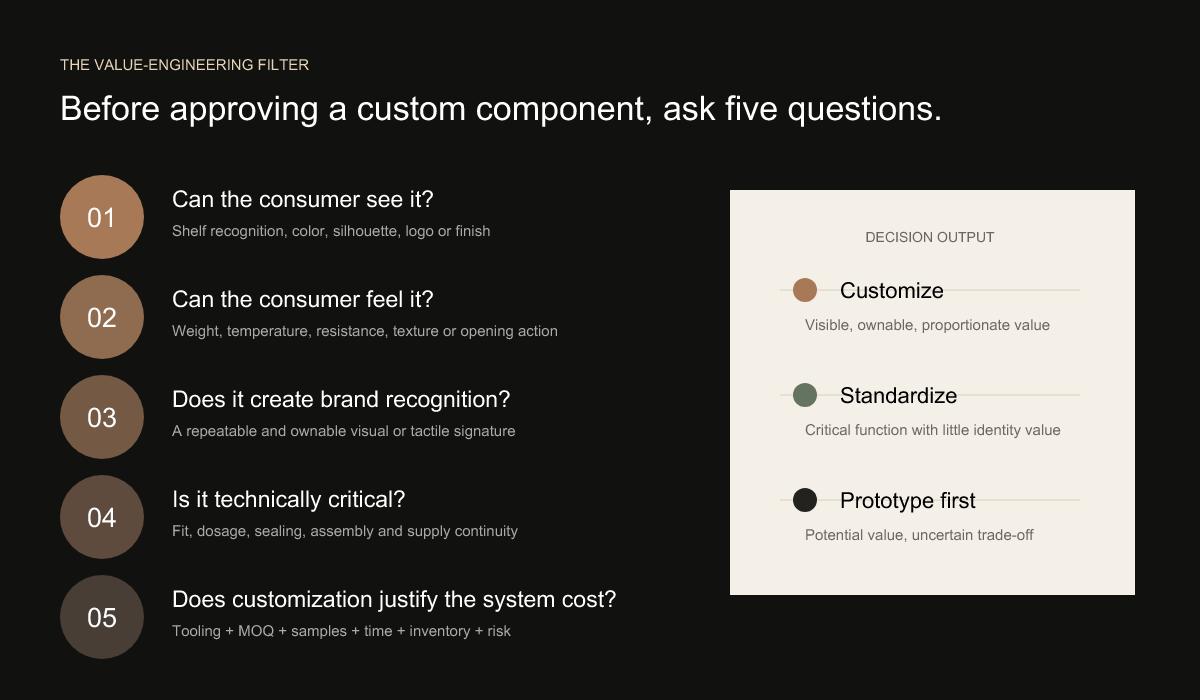
Filter keputusan tanda tangan.Visibilitas konsumen, sentuhan, pengenalan merek, pentingnya teknis, dan total biaya sistem ditinjau bersama. Diagram teknis SVG.
04 · Persepsi Konsumen
Alokasikan anggaran diferensiasi di tempat yang dapat dirasakan oleh pelanggan.
Seorang pembeli yang melihat kemasan parfum akan melalui serangkaian tahapan. Dari kejauhan, siluet, proporsi, warna, dan hubungan antara botol dan tutupnya menciptakan pengenalan. Saat dipegang, distribusi berat, kenyamanan tepi, suhu tutup, dan ketahanan terhadap pembukaan tutupnya akan memengaruhi kualitas bentuknya. Saat digunakan, sensasi saat menekan tombol dan performa semprotan akan mengkonfirmasi atau membantah janji yang diberikan. Ketika kemasan dibuka atau dikembalikan ke rak, struktur karton dan kesesuaiannya akan memperkuat ingatan tersebut.
Momen-momen ini menjelaskan mengapa prioritas kustomisasi tidak seharusnya mengikuti harga komponen. Tutup kecil mungkin lebih menarik perhatian konsumen daripada sisipan tersembunyi yang jauh lebih besar. Tanda sablon yang presisi mungkin menciptakan pengenalan yang lebih besar daripada komponen pompa khusus yang tidak terlihat. Sebaliknya, pompa dapat layak mendapatkan prioritas rekayasa yang lebih tinggi daripada yang disarankan oleh visibilitasnya karena semprotan yang buruk akan langsung merusak pengalaman produk.
Perbedaan praktisnya adalahidentitas yang terlihatmelawanrekayasa tersembunyiIdentitas yang terlihat mengundang diferensiasi selektif. Rekayasa tersembunyi mengundang platform yang terbukti, antarmuka yang terkontrol, dan validasi. Ini adalah kerangka kerja, bukan aturan universal: pengalaman pengeluaran yang dipatenkan, sistem pengisian ulang, atau detail mekanis yang terlihat dapat menjadikan bagian yang biasanya tersembunyi sebagai pusat merek. Tetapi pengecualian harus dinyatakan, bukan diasumsikan.
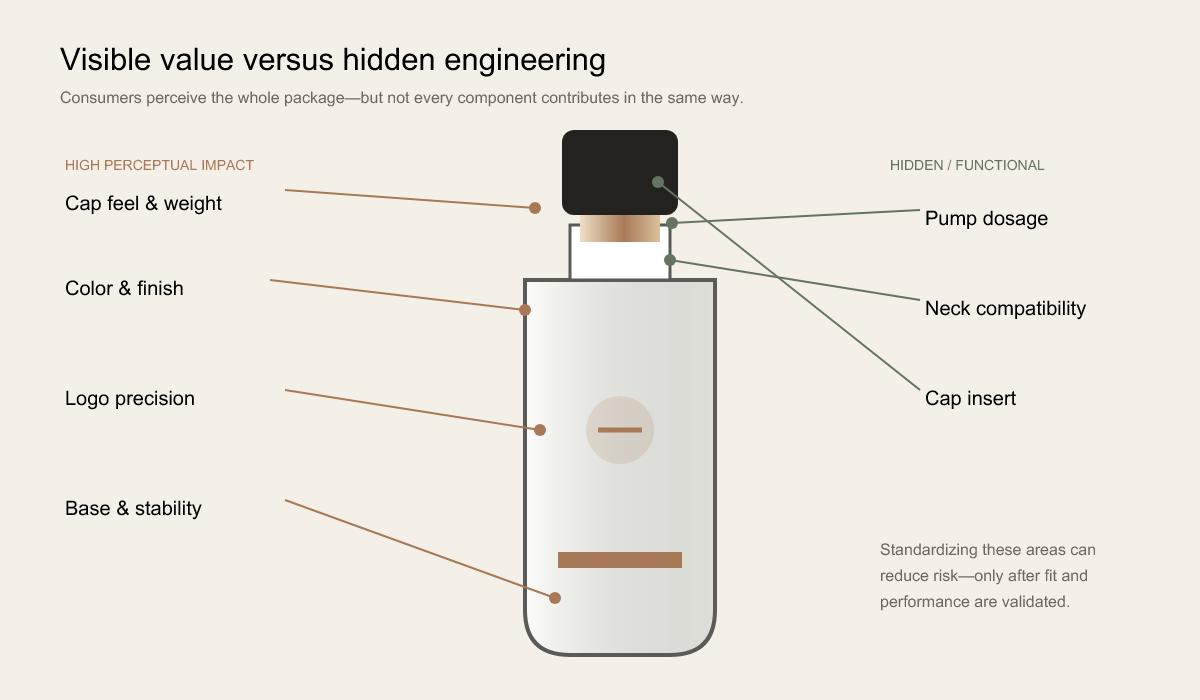
Peta persepsi.Tutup, lapisan akhir, logo, dan alas membantu mengkomunikasikan identitas; leher, pompa, dan sisipan melindungi fungsi bahkan ketika sebagian besar tidak terlihat. Diagram teknis SVG.
05 · Keputusan Botol
Cetakan yang sudah ada, stok yang dimodifikasi, atau botol parfum yang sepenuhnya dibuat khusus?
Keputusan mengenai botol memiliki pengaruh yang tidak proporsional karena geometri kaca memengaruhi pengenalan merek, area dekorasi, volume isi, berat, dimensi karton, jalur pencetakan, dan antarmuka komponen. Botol yang sepenuhnya kustom masuk akal ketika siluet eksklusif merupakan aset merek yang tahan lama—sesuatu yang dikenali pelanggan di berbagai kampanye dan wewangian di masa mendatang. Hal ini memungkinkan kontrol yang tepat atas bagian bahu, dasar, ukuran, dan proporsi, tetapi mengharuskan proyek untuk membiayai pembuatan perkakas, rekayasa, pengambilan sampel percobaan, dan validasi produksi.
Platform botol parfum yang sudah ada menawarkan geometri yang dikenal dan jalur yang lebih cepat untuk mendapatkan sampel fisik. Hal ini dapat mengurangi komitmen awal dan membantu merek memvalidasi permintaan. Batasannya bukanlah bahwa botol tersebut harus terlihat biasa; melainkan bahwa siluet strukturalnya mungkin juga tersedia untuk pembeli lain. Merek tersebut harus menciptakan kepemilikan di tempat lain.
Alternatif yang lebih efektif secara komersial adalah botol stok yang dimodifikasi: struktur kaca yang sudah ada dikombinasikan dengan sentuhan akhir, tutup, dekorasi, dan karton khusus yang terkoordinasi. Karena siluet awal pelanggan belum dikonfirmasi sebagai aset pengenalan utama.[CEK FAKTA / DAXIN UNTUK MENGKONFIRMASI]Oleh karena itu, rute ini layak dievaluasi secara serius sebelum menyetujui cetakan kaca baru. Hal ini mengalihkan anggaran dari kompleksitas pengembangan yang tak terlihat menuju aspek-aspek yang akan dilihat dan disentuh oleh orang-orang.
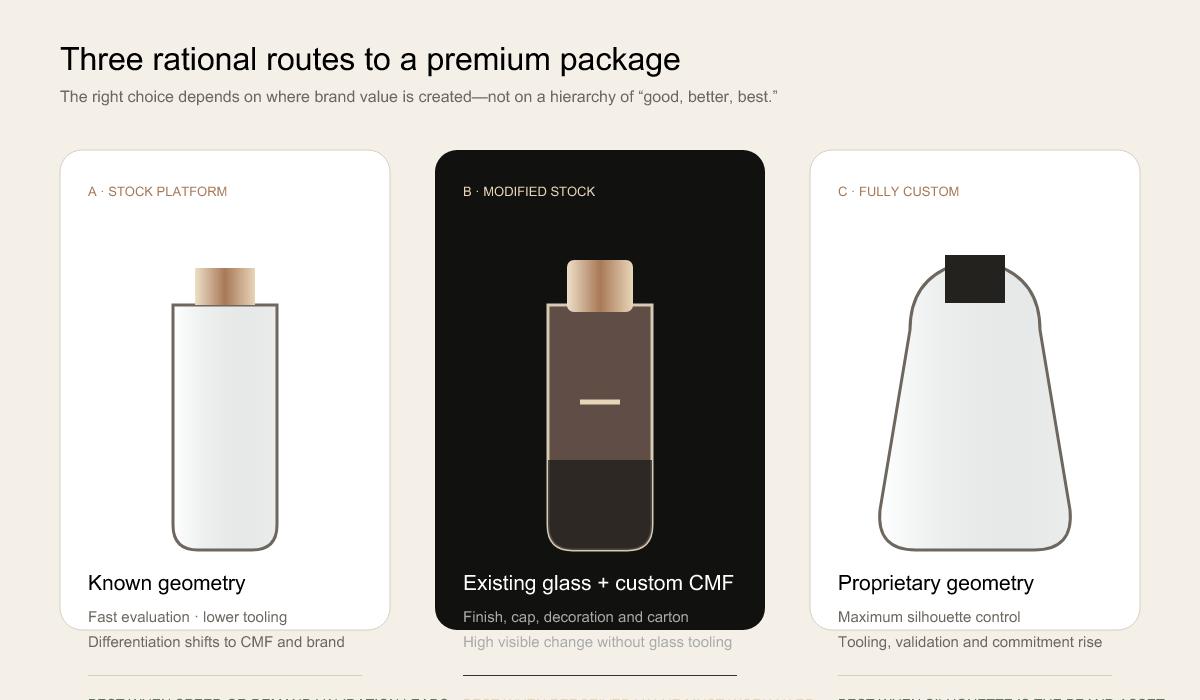
Tiga jalur rasional.Stok tidak ditampilkan sebagai inferior; stok yang dimodifikasi dapat memusatkan nilai dalam CMF, sementara kustomisasi penuh paling kuat ketika siluet membenarkan komitmen tersebut. Diagram teknis SVG.
Botol parfum standar vs botol standar yang dimodifikasi vs botol parfum yang sepenuhnya dibuat sesuai pesanan
| Faktor | Botol Stok | Botol Stok yang Dimodifikasi | Botol yang Dibuat Sesuai Pesanan |
| Peralatan | Alat struktural yang sudah ada; alat dekorasi khusus proyek mungkin tetap ada. | Tidak ada cetakan kaca baru; kemungkinan pengaturan untuk tutup, desain, atau penyelesaian akhir. | Pembuatan peralatan kaca baru dan rekayasa atau validasi terkait |
| Kecepatan | Biasanya merupakan jalur evaluasi struktural terpendek jika stok tersedia. | Menambahkan siklus sampel CMF dan komponen. | Termasuk geometri, perkakas, uji coba, dan ketergantungan persetujuan. |
| logika MOQ | Dipengaruhi oleh ketersediaan dan dekorasi yang dipilih | Seringkali didorong oleh lapisan akhir atau komponen khusus yang paling tidak fleksibel. | Harus mendukung produksi kaca dan semua komponen hilir. |
| Eksklusivitas | Terbatas pada tingkat geometri kaca | Identitas visual bisa kuat; struktur tetap tidak eksklusif. | Potensi kepemilikan struktural terkuat, tergantung pada kesepakatan. |
| Kebebasan desain | Proporsi dan area dekorasi sudah tetap. | Kebebasan tinggi dalam hal warna, finishing, tutup, desain, dan kotak. | Kontrol siluet dan proporsi tertinggi dalam batas kemampuan manufaktur. |
| Risiko pengembangan | Ketidakpastian struktural lebih rendah; kompatibilitas masih perlu diperiksa. | Berfokus pada CMF, perakitan, dan pemasangan komponen. | Lebih tinggi karena geometri, perkakas, dan pengulangan produksi adalah hal baru. |
| Skalabilitas | Bergantung pada keberlanjutan platform dan perencanaan pemasok. | Dapat diskalakan dengan baik dengan file terkontrol dan master akhir. | Kepemilikan yang kuat ketika volume di masa depan mendukung alat tersebut. |
| Kesesuaian komersial terbaik | Pengujian permintaan, kecepatan, atau desain yang dipimpin oleh grafis dan kapasitas. | Diferensiasi yang dirasakan tinggi tanpa geometri kaca baru. | Siluet yang mudah dikenali merupakan elemen penting bagi ekuitas merek jangka panjang. |
06 · Jalan Tengah
Kaca stok menjadi khas ketika CMF berperilaku sebagai sebuah sistem.
CMF—warna, material, dan finishing—kadang-kadang dianggap sebagai dekorasi yang diterapkan setelah desain "sesungguhnya" selesai. Dalam kemasan parfum, CMF bisa menjadi bagian dari desain itu sendiri. Gradien asap transparan mengubah persepsi volume dan bayangan. Lapisan matte hangat mengubah geometri yang sama menjadi objek yang lebih lembut. Tanda metalik kecil dapat menciptakan titik fokus yang disengaja. Tutup dengan suhu atau berat material yang berbeda mengubah sentuhan pertama.
Pendekatan rekayasa nilai mempertimbangkan platform kaca yang ada sebagai kanvas yang andal, bukan sebagai kompromi. Diferensiasi dapat didistribusikan melalui penyemprotan terkontrol, transparansi, sablon, atau pencetakan panas, kemudian diperkuat dengan tutup dan karton yang dirancang sebagai satu komposisi. Halaman dekorasi dan penyelesaian DAXIN memberikan konteks kemampuan; proses yang tepat, referensi warna, dan persyaratan adhesi untuk proyek anonim masih perlu dikonfirmasi.
Rute ini memiliki keterbatasan. Bahu, dinding samping, dan alas yang sudah ada dapat membatasi penutupan dan pengerjaan karya seni. Penekanan yang dalam, sudut tajam, atau area yang cekung mungkin sulit untuk diselesaikan secara konsisten. Lapisan tidak dapat menciptakan siluet kaca baru yang dapat dipatenkan atau langsung dikenali. CMF juga memiliki minimum batch, toleransi warna, dan kewajiban sampelnya sendiri. Rekayasa nilai bukan berarti menganggap dekorasi itu gratis; melainkan membandingkan di mana biayanya menghasilkan perubahan yang lebih terlihat daripada pengerjaan struktural.
07 · Pemberat Kaca
Kaca yang lebih berat memiliki nilai—tetapi nilai tersebut memiliki pengembalian yang semakin berkurang.
Merek parfum sering menggunakan berat sebagai indikator kualitas. Basis yang lebih tebal dapat meningkatkan stabilitas, menciptakan pembiasan yang lebih kaya, dan membuat botol terasa kokoh saat diangkat. Berat dapat sangat berguna ketika geometri eksternal terbatas dan merek membutuhkan kehadiran fisik daripada kerumitan dekoratif.
Namun, "lebih berat" bukanlah target tanpa batasan. Kaca tambahan memengaruhi massa unit, kebutuhan karton, dukungan sisipan, berat kemasan induk, pemuatan palet, dan pengiriman. Alas yang sangat tebal juga dapat mempersulit distribusi kaca dan kualitas visual jika geometrinya dipaksakan tanpa memperhatikan perilaku pencetakan. Tujuan keberlanjutan dapat lebih lanjut mengubah keseimbangan yang dapat diterima antara substansi yang dirasakan dan intensitas material.
Oleh karena itu, target rekayasa seharusnya adalah...berat badan yang dirasakanBukan berat maksimum. Proporsi, pusat gravitasi rendah, alas yang stabil, kepadatan tutup, dan cara botol terasa nyaman di tangan semuanya memengaruhi persepsi tersebut. Botol yang seimbang dengan alas yang tepat dan tutup yang mantap dapat terasa lebih mantap daripada botol yang lebih berat yang massanya tampak sembarangan. Berat dan distribusi kaca yang dipilih untuk kasus sebenarnya memerlukan konfirmasi DAXIN.
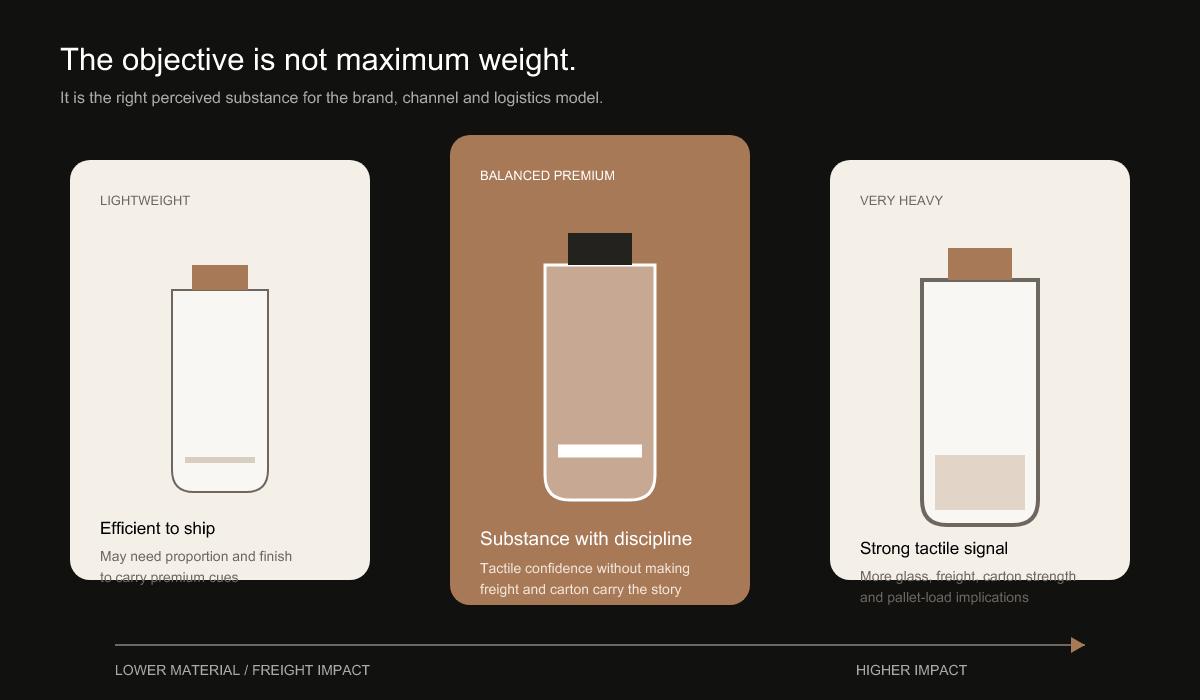
Kompromi berat.Penggunaan kaca yang lebih banyak dapat memperkuat sentuhan sekaligus meningkatkan konsekuensi pengemasan dan logistik; posisi optimal bergantung pada posisi spesifik. Diagram teknis SVG.
08 · Strategi Batasan
Tutup botol bisa menjadi tempat yang lebih baik untuk mengalokasikan anggaran kustomisasi.
Tutup botol menempati area visual yang lebih kecil daripada botol itu sendiri, tetapi konsumen berulang kali menyentuhnya. Berat, suhu, posisi, kekuatan saat membuka, dan suara yang dihasilkannya dapat meningkatkan persepsi kualitas atau justru mengungkap ketidaksesuaian. Selain itu, tutup botol berada di bagian atas siluet, di mana proporsi yang khas dapat dikenali dalam foto dan di rak toko.
Hal ini menciptakan alternatif yang berharga: menggabungkan platform kaca yang telah teruji dengan penutup yang lebih khas. Konstruksi ABS yang berbobot, cangkang aluminium yang bersih, atau bentuk zamac yang artistik dapat menciptakan rasa kepemilikan taktil dan visual tanpa perlu mengubah geometri kaca. Sisipan khusus dapat menyesuaikan penutup luar dengan amplop penutup standar—asalkan retensi, posisi vertikal, keselarasan rotasi, dan perilaku material telah divalidasi.
Kelemahannya adalah tutup kemasan bukanlah sebuah karya seni yang berdiri sendiri. Tutup yang terlalu berat dapat membuat kemasan menjadi tidak seimbang. Tutup yang lebar dapat bertabrakan dengan geometri bahu kemasan atau ruang bebas karton. Lapisan logam yang terlihat mewah dalam rendering dapat bertentangan dengan cetakan panas atau kerah kemasan setelah masing-masing diproduksi pada substrat yang berbeda. Karena alasan ini, anggaran untuk tutup kemasan harus mencakup kesesuaian fisik dan persetujuan CMF, bukan hanya harga cangkang kemasan.
Botol kaca standar dengan tutup yang mudah diingat dapat menciptakan diferensiasi yang lebih besar daripada botol khusus dengan penutup generik—ketika tutupnya benar-benar mencerminkan ide merek tersebut.
Sebuah opsi strategis, bukan aturan universal.
09 · Pilihan Material
Zamac vs aluminium vs ABS: biaya hanyalah salah satu dimensinya
ABS menawarkan fleksibilitas bentuk dan dekorasi yang luas dengan bobot yang relatif rendah. Bahan ini dapat diwarnai, dilapisi, atau dimetalisasi, dan bobot internal dapat mengatur sentuhan tanpa mengubah tampilan luarnya. Nilai yang dirasakan bergantung pada desain dinding, kontrol sambungan, pengerjaan permukaan, kualitas sisipan, dan cara bahan tersebut berinteraksi dengan botol.
Aluminium memberikan tampilan metalik alami dan sentuhan awal yang dingin. Material ini dapat mendukung bahasa desain yang bersih dan presisi tanpa bobot berlebih seperti zamac. Proses manufaktur, ketebalan dinding, batasan pembentukan, pilihan anodisasi atau finishing, dan hubungannya dengan struktur plastik internal semuanya memengaruhi hasilnya. Ini bukan sekadar "logam, jadi premium."
Zamac dapat memberikan bobot yang substansial, kepadatan yang kompak, dan bentuk yang lebih artistik. Hal ini menjadikannya pilihan tepat untuk merek yang tutup botolnya merupakan barang koleksi atau ciri khas. Namun, bahan ini juga membutuhkan peralatan khusus, kontrol penyelesaian akhir, dan pertimbangan pengiriman yang cermat. Rekomendasi yang tepat muncul dari posisi merek, target sentuhan, geometri, kuantitas, dan anggaran—bukan dari peringkat material universal. Halaman DAXIN untuk tutup botol zamac dan tutup botol plastik menawarkan konteks sumber yang saling terkait.
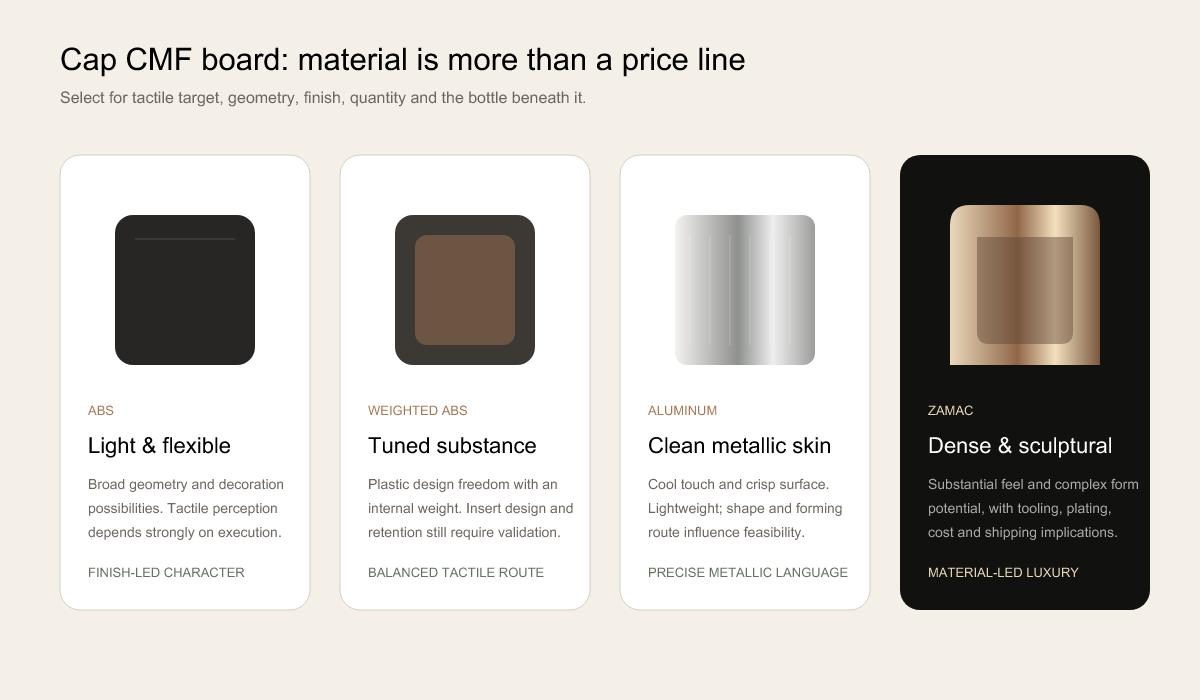
Papan CMF tutup.Karakteristik material, geometri, struktur internal, dan penyelesaian permukaan harus dinilai secara bersamaan. Diagram teknis SVG.
Perbandingan bahan tutup parfum
| Bahan Tutup | Berat Badan yang Dirasakan | Kebebasan Desain | Opsi Penyelesaian | Implikasi Biaya | Paling Sesuai |
| ABS | Secara umum lebih ringan; eksekusinya bisa membuatnya terasa disengaja. | Sangat cocok untuk berbagai geometri cetakan dan susunan sisipan. | Warna, lapisan, metalisasi, cetak, dan tekstur tergantung pada desain. | Seringkali komitmennya lebih rendah daripada jalur logam, tetapi pengerjaan dan penyelesaian akhir tetap penting. | Desain grafis, berbasis warna, atau berbasis geometri di mana bobot rendah dapat diterima. |
| ABS Berbobot | Dapat disetel melalui pemberat internal. | Tinggi, dengan persyaratan struktur internal tambahan. | Opsi visual serupa dengan ABS | Pertimbangan tambahan terkait suku cadang, perakitan, dan retensi. | Merek yang mencari keseimbangan sentuhan tanpa penutup luar yang sepenuhnya terbuat dari logam. |
| Aluminium | Sentuhan metalik dengan massa yang relatif rendah. | Bergantung pada pembentukan dan geometri cangkang | Efek anodisasi, disikat, dipoles, atau dilapisi jika memungkinkan. | Proses pengerjaan logam dan komponen internal harus dievaluasi bersama-sama. | Bahasa metalik yang bersih, presisi, dan kontemporer. |
| Zamac | Biasanya besar dan padat | Potensi pahatan yang kuat dalam batasan perkakas dan pengecoran. | Pelapisan, penyepuhan, dan perincian permukaan tergantung pada desain bagian. | Implikasi terhadap perkakas, massa komponen, penyelesaian akhir, dan logistik yang lebih tinggi. | Sebuah topi yang dirancang sebagai ciri khas taktil atau objek koleksi. |
10 · Platform Fungsional
Apakah pompa parfum perlu disesuaikan?
Pompa sebagian besar tersembunyi setelah perakitan, tetapi ini adalah salah satu tempat yang paling tidak toleran untuk melakukan kustomisasi simbolis. Dosis semprotan, semburan, resistansi aktuator, kompatibilitas gasket, kualitas pengencangan, tinggi pemasangan, panjang pipa celup, dan kontinuitas pasokan memengaruhi penggunaan dan perakitan. Aktuator luar yang baru atau lapisan akhir yang terbuka mungkin membenarkan pengembangan; platform internal khusus yang tidak menciptakan perbedaan pengguna yang berarti hanya dapat meningkatkan risiko.
Kerangka kerja standar yang kuat adalah:Standarisasi rekayasa yang tak terlihat, kustomisasi identitas yang terlihat.Di sini, "standarisasi" bukan berarti memilih pompa siap pakai secara acak. Artinya, pilih keluarga pompa yang terbukti dan tersedia yang kompatibel dengan leher botol, formula, metode pengisian, dosis yang diinginkan, dan sistem tutup, kemudian tentukan hasil pemasangannya. DAXIN'spilihan alat penyemprot parfumMemberikan titik awal, bukan persetujuan otomatis untuk produk tertentu.
Platform terstandarisasi dapat menyederhanakan penggantian, perencanaan pemesanan ulang, dan kontinuitas pemasok. Hal ini juga dapat mempermudah rekayasa tutup dan kerah karena ukuran terpasang sudah diketahui. Proyek ini hanya perlu menyesuaikan pompa jika pengalaman penyemprotan, aktuator yang terlihat, konsep pengisian ulang, atau fitur lain yang disengaja menciptakan nilai konsumen atau fungsional yang memadai. Kompatibilitas formula dan persyaratan kinerja untuk kasus anonim masih perlu dikonfirmasi.
11 · ROI Dekorasi
Perubahan visual yang besar tanpa mengubah cetakan botol.
Dekorasi seringkali menjadi salah satu penggunaan anggaran yang paling efektif karena secara langsung mengubah permukaan yang berhadapan dengan konsumen. Penyemprotan dapat menghadirkan warna buram, tembus pandang, atau kedalaman gradien. Pelapisan buram atau lapisan matte mengubah cahaya dan sentuhan. Sablon dapat menciptakan ritme grafis yang tajam. Stempel panas atau elemen logam kecil dapat memfokuskan perhatian tanpa menutupi kaca.
Nilai tambah berasal dari pengendalian diri dan koordinasi. Lima efek yang tidak berhubungan dapat terlihat kurang premium dibandingkan satu sentuhan akhir yang terkontrol dengan penempatan logo yang tepat. Sentuhan akhir harus mendukung geometri botol dan material tutup, bukan bersaing dengannya. Desain grafis harus memperhatikan area yang dapat dicetak, radius sudut, dan batasan proses. Detail metalik pada kaca, tutup, leher botol, dan karton harus memiliki tujuan visual yang sama meskipun perbedaan substrat membuat kecocokan fisik yang sempurna menjadi tidak mungkin.
Dekorasi juga mencakup jumlah minimum pesanan, pengaturan, pencocokan warna, penutupan area yang tidak ingin dicat, pengujian daya rekat, pengeringan, dan uji sampel. Proyek yang memilih kaca yang sudah ada untuk menghindari pembuatan cetakan baru tidak boleh mengabaikan kewajiban tersebut. Keuntungannya adalah risiko pengembangan terkonsentrasi pada permukaan yang terlihat, bukan terbagi antara struktur baru dan permukaan baru secara bersamaan.
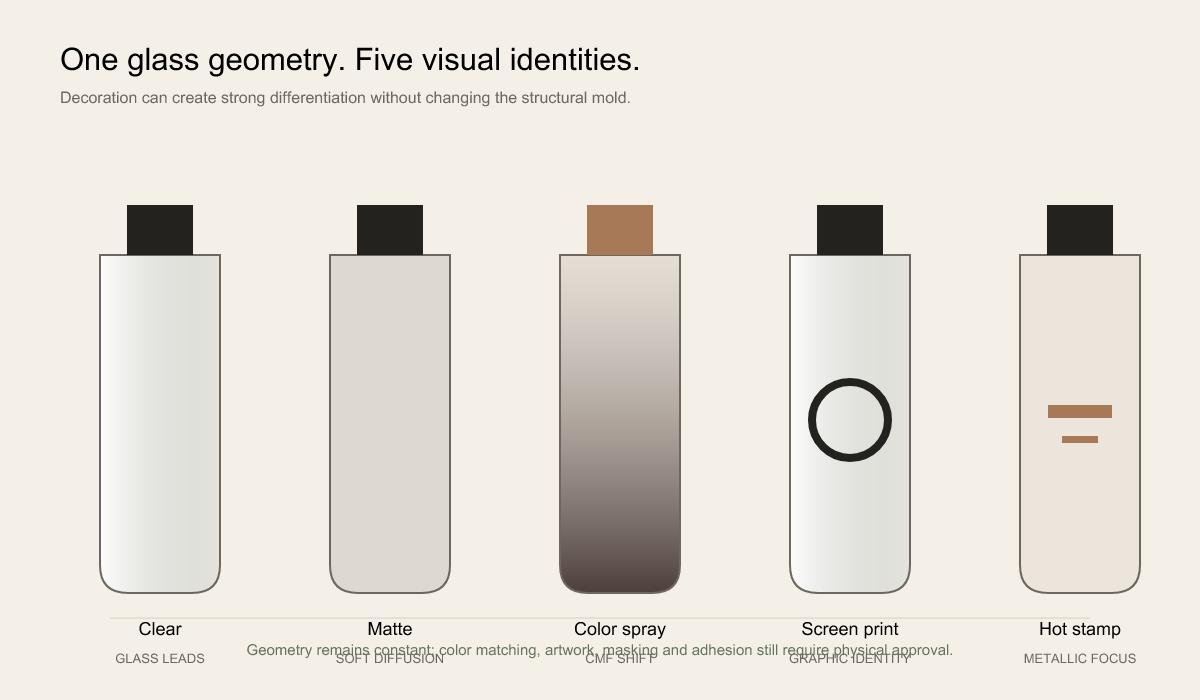
Transformasi dekorasi.Struktur tetap konstan sementara cahaya, warna, dan identitas grafis berubah; persetujuan warna fisik dan daya rekat tetap penting. Diagram teknis SVG.
12 · Lensa 80/20
Keputusan-keputusan mana saja yang menciptakan sebagian besar persepsi premium?
Konsep “80/20” adalah lensa pengambilan keputusan, bukan hukum yang terukur. Konsep ini memaksa tim untuk memberi peringkat dampak daripada memberikan bobot emosional yang sama pada setiap item. Untuk banyak proyek parfum, siluet, dasar, tutup, warna, hasil akhir, ketelitian logo, dan pengalaman pembukaan memiliki peran besar dalam persepsi kualitas. Bagian dalam pompa yang tersembunyi dan detail penahan tutup mungkin penting untuk fungsi, tetapi tidak secara otomatis memerlukan geometri khusus.
Peringkat berubah berdasarkan konsep. Parfum isi ulang mungkin menjadikan mekanisme penutup sebagai bagian dari cerita. Botol bening minimalis mungkin hampir sepenuhnya bergantung pada distribusi kaca dan tanda cetak kecil. Konsep regional yang kaya dekorasi mungkin lebih menempatkan identitas pada tutup dan karton daripada pada botolnya. Oleh karena itu, matriks nilai menggunakan penilaian dan penjelasan kualitatif daripada skor universal yang semu.
Matriks tersebut juga membedakanvisibilitas konsumendaripentingnya fungsiVisibilitas rendah tidak boleh diartikan sebagai prioritas rendah. Pompa dan leher pompa bisa menjadi komponen penting namun bervisibilitas rendah, dan strategi terbaiknya adalah standarisasi yang kuat. Sebaliknya, dekorasi bisa bervisibilitas tinggi dengan kepentingan struktural yang lebih rendah, menjadikannya kandidat branding yang kuat tetapi bukan pengganti rekayasa.
Matriks nilai kemasan parfum
| Komponen | Visibilitas Konsumen | Pentingnya Fungsional | Biaya/Risiko Kustomisasi | Nilai Merek | Strategi yang Direkomendasikan |
| Botol kaca | Tinggi | Tinggi | Sedang hingga tinggi ketika geometri masih baru. | Tinggi ketika siluet atau distribusi kaca dapat dikenali. | Lakukan kustomisasi jika struktur memiliki identitas; jika tidak, evaluasi stok + CMF. |
| Leher | Rendah setelah perakitan | Tinggi | Tinggi jika antarmuka nonstandar diperkenalkan | Biasanya rendah kecuali jika sengaja diekspos. | Lebih memilih antarmuka yang sudah teruji dan mendukung ketersediaan pompa dan tutup. |
| Pompa | Rendah hingga menengah | Tinggi | Sedang hingga tinggi untuk platform baru | Sedang ketika semprotan atau aktuator merupakan bagian dari pengalaman. | Standarisasi platform kecuali jika fungsi yang khas layak untuk dikembangkan. |
| Kerah | Sedang | Sedang | Sedang karena kesesuaian dan penyelesaian saling berkaitan. | Medium sebagai transisi antara kaca dan tutup. | Gunakan platform yang kompatibel dan sesuaikan permukaan atau proporsi secara selektif. |
| Topi | Tinggi | Sedang hingga tinggi | Sedang hingga tinggi berdasarkan bahan dan alat. | Tinggi karena konsumen melihat dan menyentuhnya. | Kandidat kuat untuk investasi perkakas atau material selektif. |
| Dekorasi | Tinggi | Sedang | Sedang; pengaturan dan pengulangan sangat penting. | Unggul dalam hal warna, logo, dan pengenalan. | Gunakan sebagai pembeda berdaya ungkit tinggi dengan master fisik. |
| Kotak | Tinggi sebelum pembukaan | Tingkat perlindungan sedang hingga tinggi | Media; struktur dan cetakan memiliki efek yang terpisah. | Tinggi untuk cerita ritel dan pengungkapannya | Sesuaikan pengalaman sambil mengontrol ukuran dan perlindungan. |
| Menyisipkan | Rendah hingga menengah | Nilai tinggi untuk retensi dan perlindungan. | Rendah hingga menengah, tergantung pada bahan dan struktur. | Biasanya lebih rendah kecuali terlihat saat dibuka. | Rancanglah kesesuaian, perlindungan, dan efisiensi kemasan sebelum mengutamakan hiasan. |
13 · Pesanan Minimum
“Berapa jumlah pesanan minimum Anda?” biasanya adalah pertanyaan yang salah.
Satu paket parfum lengkap tidak melalui satu proses produksi saja. Botol kaca yang sudah ada dapat memiliki satu kondisi ketersediaan, lapisan akhir yang disemprotkan memiliki persyaratan batch yang berbeda, tutup khusus memiliki ambang batas produksi yang berbeda, pompa memiliki aturan pasokan yang berbeda, dan kotak cetak memiliki kuantitas efisien yang berbeda pula. Pembuatan cetakan dapat menciptakan komitmen sebelum unit jadi dipesan. Varian warna dapat membagi volume yang seharusnya bermanfaat menjadi batch yang lebih kecil.
Pertanyaan yang lebih tepat adalah:Komponen manakah yang menciptakan batasan MOQ (Minimum Order Quantity) tertinggi atau terendah dalam sistem pengemasan ini?Pertanyaan itu mengungkapkan apakah paket yang diminta sesuai dengan perkiraan pesanan pertama. Ini juga menunjukkan desain ulang yang tepat. Jika tutup khusus menjadi kendala, merek dapat mempertimbangkan tutup yang sudah ada dengan sentuhan akhir khusus proyek, menggunakan tutup yang sama untuk wewangian di masa mendatang, menerapkan alat kustom secara bertahap, atau menerima persediaan tambahan karena tutup tersebut memiliki nilai merek yang cukup tinggi.
Jumlah pesanan minimum (MOQ) harus dipetakan pada tingkat komponen dan proses sebelum konsep akhir ditetapkan. Pemetaan tersebut harus mencakup kaca, setiap operasi dekorasi, cangkang tutup dan sisipan, pompa dan kerah, kotak, sisipan, dan setiap perakitan atau aksesori. Kuantitas DAXIN yang tepat harus berasal dari penawaran harga terkini; studi kasus ini sengaja menghindari publikasi angka universal yang belum diverifikasi.
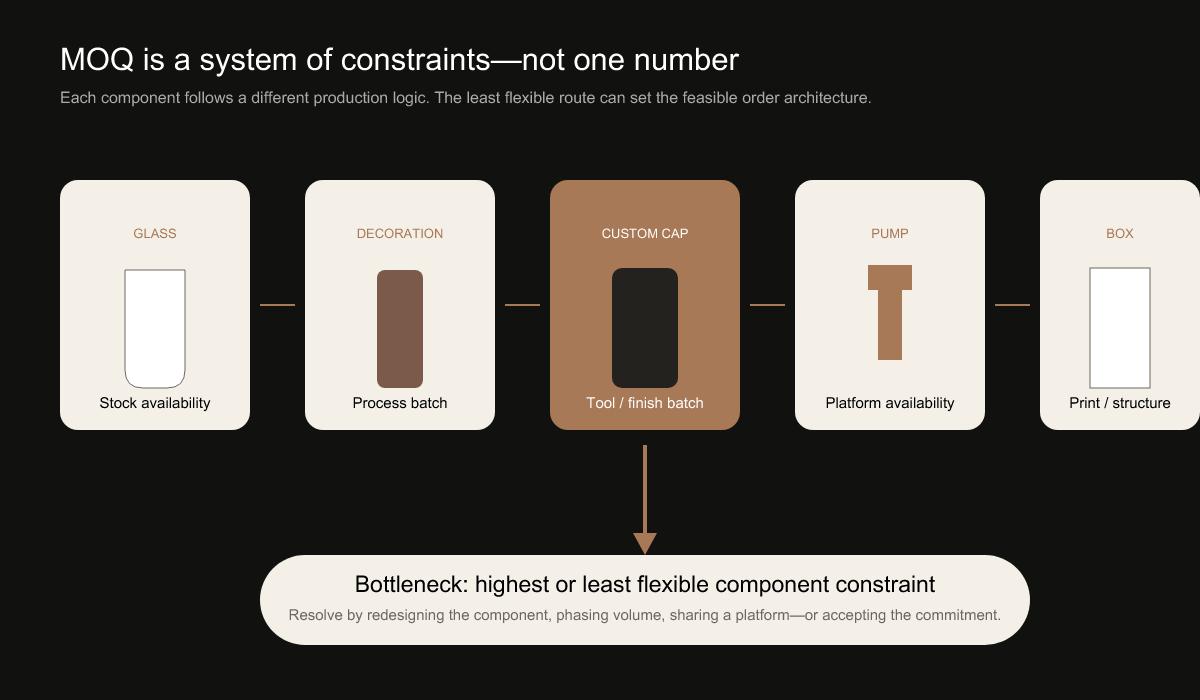
Logika hambatan MOQ (Minimum Order Quantity).Tutup yang disorot adalah batasan ilustratif, bukan klaim kuantitas DAXIN; proyek nyata dapat diatur oleh komponen atau proses apa pun. Diagram teknis SVG.
14 · Tinjauan Hambatan
Komponen yang paling tidak fleksibel dapat menentukan apakah proyek tersebut layak secara komersial.
Pertimbangkan sebuah proyek di mana botol yang sudah ada tersedia dalam jumlah yang sesuai dengan peluncuran, pelapisan yang direncanakan dapat dilakukan dengan ukuran batch yang berbeda, tutup khusus membutuhkan komitmen yang lebih besar, pompa dipesan dalam jumlah yang berbeda, dan pemasok karton memiliki biaya pencetakan yang terpisah. Tidak ada satu angka pun yang dapat menggambarkan sistem tersebut. Merek tersebut mungkin menerima lebih banyak tutup daripada botol yang dihias, lebih banyak pompa daripada kotak, atau sisipan sisa yang tidak dapat digunakan kembali.
Respons pertama seharusnya bukan dengan menurunkan setiap angka secara terpisah. Kesalahan kecil yang mengganggu proses yang efisien dapat meningkatkan biaya per unit atau mengurangi stabilitas produksi. Sebaliknya, tim harus mengidentifikasi ketidaksesuaian mana yang menciptakan risiko modal kerja dan apakah arsitektur dapat menyerapnya. Pompa umum mungkin dapat digunakan untuk proyek-proyek mendatang. Cangkang tutup yang polos mungkin akan diselesaikan kemudian. Sisipan netral mungkin dapat digunakan pada dua desain kotak yang berbeda. Opsi-opsi ini memerlukan konfirmasi dari pemasok, tetapi menunjukkan mengapa kesamaan komponen memiliki nilai finansial.
Kendala juga bisa berupa waktu, bukan kuantitas. Suatu komponen mungkin memiliki MOQ (Minimum Order Quantity) yang dapat diterima tetapi jendela produksi tidak tersedia. Komponen lain mungkin memerlukan sampel warna yang berada pada jalur kritis. Oleh karena itu, pengadaan harus memetakan jumlah minimum, waktu tunggu, umur simpan (jika relevan), volume penyimpanan, dan potensi penggunaan kembali secara bersamaan. Hal ini mengubah MOQ dari pertanyaan penjualan yang membuat frustrasi menjadi masukan desain.
15 · Alokasi Peralatan
Investasikan uang untuk pembuatan peralatan pada aset merek yang dapat digunakan berulang kali.
Anggaran pengemasan dapat mendanai cetakan kaca khusus, cetakan tutup, ornamen logam, cetakan sisipan, atau bahkan tidak perlu alat struktural baru sama sekali. Pilihan yang tepat bukanlah baris yang paling terlihat pada proposal pemasok. Yang penting adalah alat yang hasil keluarannya tetap berharga di berbagai interaksi konsumen dan pesanan di masa mendatang.
Cetakan botol khusus dapat sangat bermanfaat ketika siluetnya terlindungi dan dapat diulang dalam berbagai ukuran. Cetakan tutup botol dapat memusatkan investasi pada objek yang disentuh konsumen. Ornamen logam kecil dapat menciptakan titik fokus yang mudah dikenali sambil memungkinkan struktur botol dan tutup tetap standar. Sisipan khusus dapat dibenarkan ketika melindungi botol yang tidak biasa atau menciptakan tampilan yang terkontrol, tetapi kerumitan dekoratif yang tersembunyi di bawah produk mungkin tidak sepadan dengan biayanya.
Setiap proposal pembuatan cetakan harus ditinjau berdasarkan visibilitas konsumen, kekhasan merek, perkiraan volume, penggunaan kembali di berbagai SKU, ketentuan kepemilikan atau eksklusivitas, waktu tunggu, validasi produksi, dan risiko teknis. Informasi pencetakan internal DAXIN relevan untuk jalur kustom, tetapi jenis cetakan sebenarnya, ketentuan kepemilikan, dan jadwal harus dikonfirmasi untuk proyek tertentu.
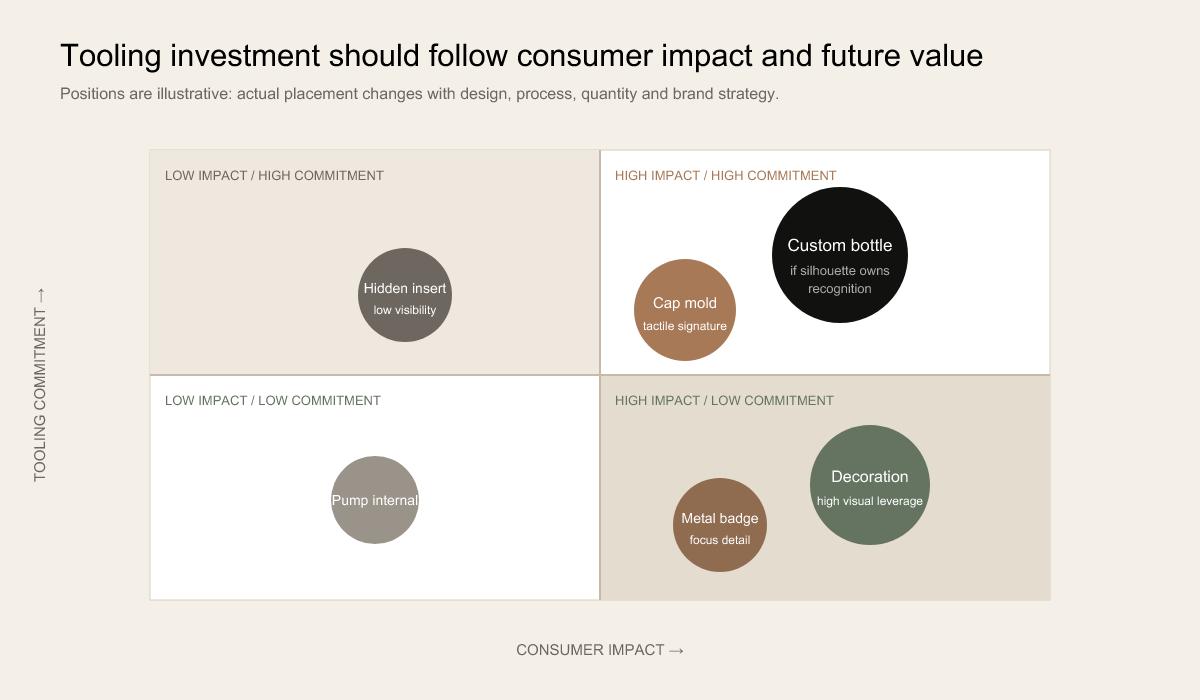
Matriks peralatan.Penempatan bersifat konseptual dan harus mengikuti desain; hal ini mencegah tim mendanai fitur yang membutuhkan komitmen tinggi namun berdampak rendah karena kebiasaan. Diagram teknis SVG.
16 · Perbandingan Komersial
Biaya terendah per botol tidak sama dengan biaya pengemasan total terendah.
Harga botol yang rendah bisa jadi memang wajar, tetapi tetap menghasilkan proyek yang mahal. Jika botol tersebut membutuhkan pemasok tutup terpisah, pengiriman barang tambahan, dua putaran sampel tambahan, perakitan lokal, dan serah terima inspeksi baru, perbedaan pada lini komponen mungkin akan hilang. Jika ketidaksesuaian ditemukan setelah dekorasi, biayanya bukan lagi hanya suku cadang pengganti; tetapi juga termasuk persediaan barang jadi, pengerjaan ulang, kehilangan jadwal, dan perhatian yang teralihkan dari peluncuran produk.
Total biaya proyek mencakup perkakas, sampel, komponen, penyelesaian akhir, pengiriman, kontrol kualitas, koordinasi, perakitan, risiko pengerjaan ulang, inventaris, dan keterlambatan. Beberapa kategori terlihat dalam penawaran pemasok. Kategori lainnya muncul dalam biaya tenaga kerja internal merek, gudang, rencana peluncuran, atau penghapusan aset. Rekayasa nilai membuat kategori tersembunyi ini dapat dibandingkan sebelum jalur akhir dipilih.
Ini tidak berarti proposal dari satu sumber otomatis menjadi yang terbaik. Pemasok spesialis dapat menciptakan nilai material atau teknis yang penting. Pertanyaannya adalah apakah nilai tersebut melebihi biaya antarmuka dan apakah tanggung jawab atas gambar, master, logistik, inspeksi, dan perakitan akhir sudah jelas. Halaman manajemen rantai pasokan dan kualitas DAXIN menjelaskan kemampuan yang relevan; rencana dan hasil inspeksi spesifik proyek memerlukan catatan.
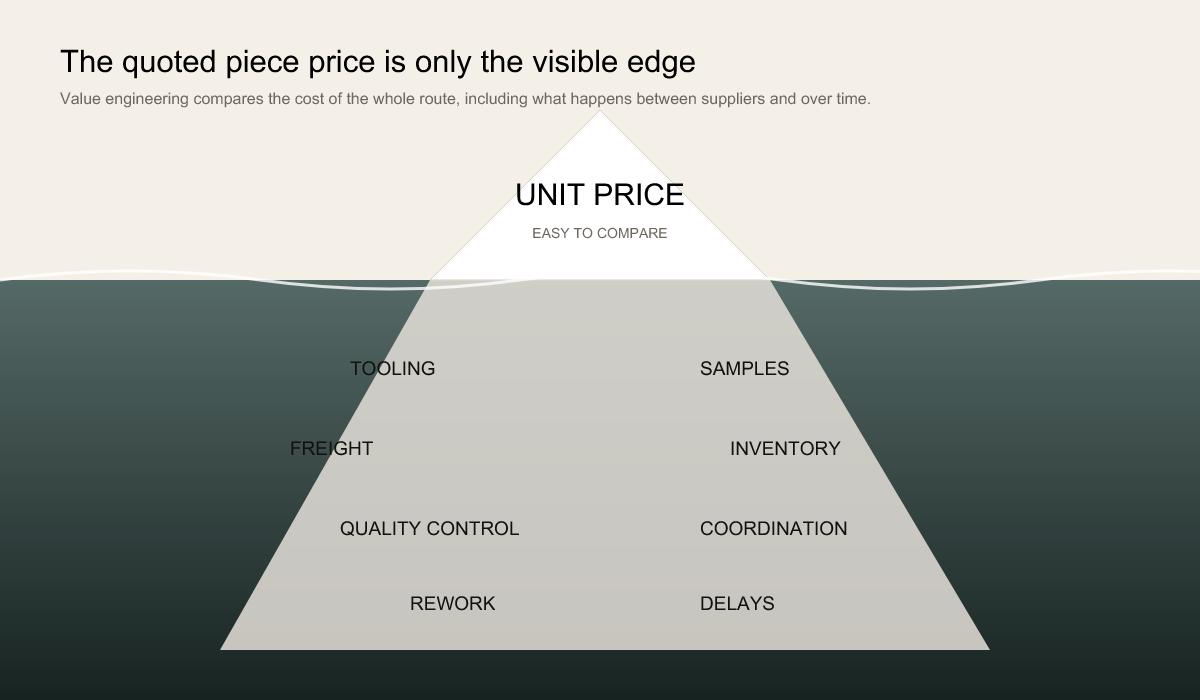
Gunung es biaya.Harga satuan paling mudah dibandingkan, sedangkan hasil komersial seringkali ditentukan di bawah garis penawaran. Diagram teknis SVG.
Kategori biaya pengemasan parfum secara keseluruhan
| Jalur Investasi | Dampak Konsumen | Sering Terabaikan? | Mengapa Ini Penting |
| Harga komponen | Ya | Jarang | Patokan dasar yang diperlukan, tetapi hanya bermakna jika dikaitkan dengan spesifikasi dan konteks kuantitas. |
| Cetakan dan perkakas | Biasanya | Kepemilikan, pemeliharaan, dan modifikasi di masa mendatang mungkin meliputi: | Menciptakan komitmen di awal dan dapat menjadi aset yang dapat digunakan kembali. |
| Sampel | Sebagian | Waktu peninjauan internal dan pengiriman berulang sering kali | Setiap putaran dapat menambah waktu pengambilan keputusan dan mengungkap ketergantungan baru. |
| Penataan dekorasi | Kadang-kadang | Upaya pencocokan dan persetujuan master mungkin | Mengontrol permukaan yang paling terlihat dan memengaruhi pengulangan. |
| Pengiriman dan pengemasan | Sering terpisah | Berat dimensi, gerakan tambahan, dan peningkatan perlindungan mungkin terjadi. | Kaca tebal dan kotak besar dapat mengubah perekonomian lahan. |
| Inspeksi | Bervariasi | Koordinasi dan penanganan barang yang tidak sesuai standar dapat dilakukan. | Paket yang kompleks memerlukan penerimaan yang jelas di tingkat komponen dan perakitan. |
| Perakitan | Bervariasi | Perlengkapan, penanganan, pencegahan goresan, dan hasil panen seringkali | Seperangkat komponen yang indah belum tentu merupakan paket yang dapat diulang. |
| Inventaris | TIDAK | Sering | Persyaratan minimum yang kaku dapat menjebak uang tunai dalam komponen sisa yang eksklusif. |
| Menunda | TIDAK | Sering | Kehilangan kesempatan penjualan atau kampanye yang menguntungkan dapat mengalahkan penghematan harga per unit yang kecil. |
| Mengolah lagi | TIDAK | Sering | Ketidakcocokan yang terjadi di tahap akhir melipatgandakan biaya pada komponen yang sudah jadi. |
17 · Biaya Tersembunyi
Pisahkan kompleksitas yang menambah nilai dari kompleksitas yang tidak menambah nilai.
Kompleksitas memiliki tempatnya ketika meningkatkan pengenalan, sentuhan, kinerja, atau perlindungan. Geometri tutup khusus yang dikenali dan digunakan kembali oleh konsumen di seluruh lini produk dapat menjadi kompleksitas yang menambah nilai. Lapisan metalik kedua yang terlihat hampir identik tetapi membutuhkan pemasok lain, master lain, dan siklus sampel lain mungkin merupakan kompleksitas yang tidak menambah nilai.
Setiap tambahan material, pemasok, warna, komponen, cetakan, lapisan akhir, dan SKU menciptakan ketergantungan. Ketergantungan membutuhkan spesifikasi, pemilik, tanggal, dan kriteria penerimaan. Hal ini juga dapat menciptakan jalur kegagalan: tutup yang terlambat menunda persetujuan pemasangan kotak; lapisan yang direvisi mengubah daya rekat stempel panas; penggantian pompa mengubah tinggi pemasangan. Oleh karena itu, biaya kompleksitas sebagian bersifat finansial dan sebagian lagi probabilistik—paket tersebut memiliki lebih banyak cara untuk menjadi terlambat, tidak kompatibel, atau sulit dipesan ulang.
Solusinya bukanlah minimalisme demi minimalisme itu sendiri. Solusinya adalah pencatatan kompleksitas yang eksplisit. Untuk setiap komponen yang luar biasa, tim mencatat nilai konsumen atau nilai teknis, ketergantungan baru yang diciptakannya, orang yang bertanggung jawab atas antarmuka, dan rencana penggunaan kembali di masa mendatang. Jika nilai tersebut tidak dapat dinyatakan dengan jelas, penyederhanaan perlu dipertimbangkan.
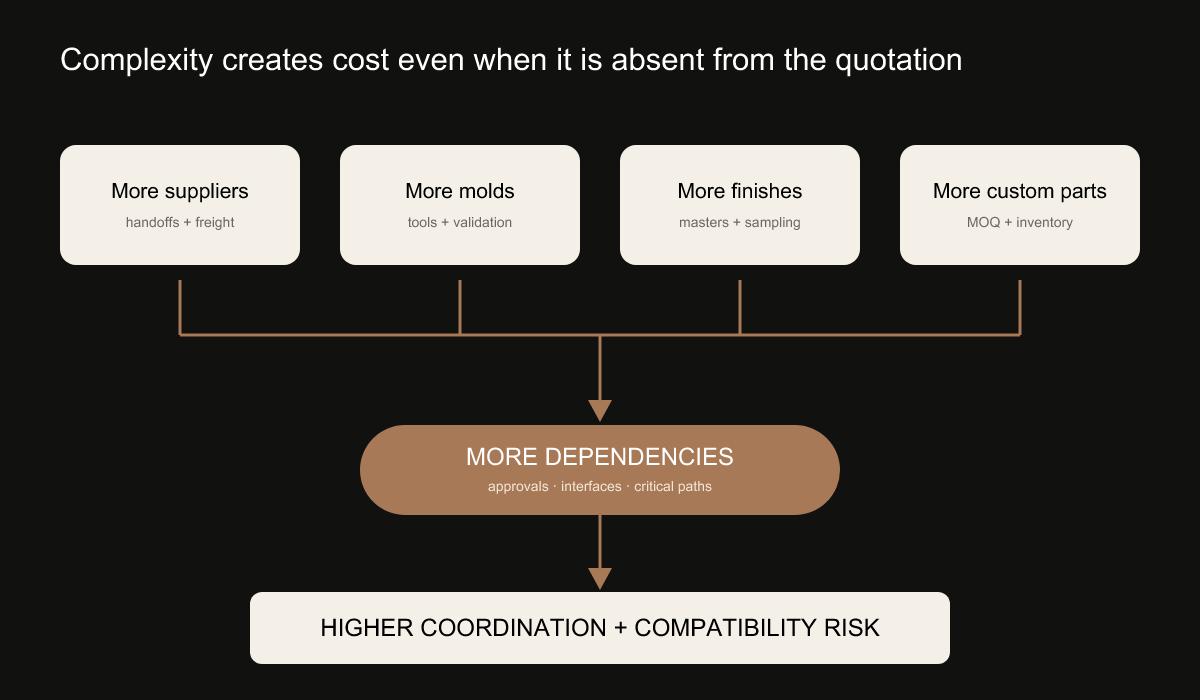
Biaya kompleksitas.Semakin banyak komponen bukan berarti otomatis menjadi masalah; ketergantungan yang tidak terkelola atau tidak diberi penghargaanlah yang menjadi masalah. Diagram teknis SVG.
18 · Waktu Peluncuran ke Pasar
Waktu tunggu juga merupakan biaya.
Komponen yang lebih murah yang menunda peluncuran dapat menjadi mahal secara komersial. Rekayasa perkakas, pembuatan cetakan, produksi percobaan, sampel permukaan, pengujian kompatibilitas, dan persetujuan akhir terjadi dalam rantai ketergantungan. Beberapa tugas dapat berjalan secara paralel; yang lain tidak dapat dimulai sampai antarmuka atau sampel fisik ditetapkan.
Sebuah merek dengan jadwal peninjauan lini ritel tetap, pemotretan kampanye, atau peluncuran musiman menghargai waktu secara berbeda dibandingkan dengan seorang pendiri yang memvalidasi konsep tanpa tanggal pasti. Dalam kasus pertama, botol yang sudah ada ditambah CMF (Custom Materials Finish) khusus dapat melindungi jendela peluncuran. Dalam kasus kedua, botol khusus mungkin sepadan dengan waktu yang lebih lama karena siluetnya sangat penting bagi bisnis. Rekayasa nilai seharusnya mengungkap pilihan tersebut daripada diam-diam menjadikan kecepatan sebagai tujuan universal.
Jadwal harus menunjukkan fase relatif, pemilik persetujuan, dan jalur kritis. Jadwal juga harus mencakup waktu pengambilan keputusan di pihak pelanggan. Sampel yang belum ditinjau tetap merupakan penundaan proyek. Durasi pasti tidak dipublikasikan di sini karena ketersediaan peralatan, kapasitas, pengambilan sampel, dan produksi yang sebenarnya harus dikonfirmasi ketika spesifikasi sudah diketahui.
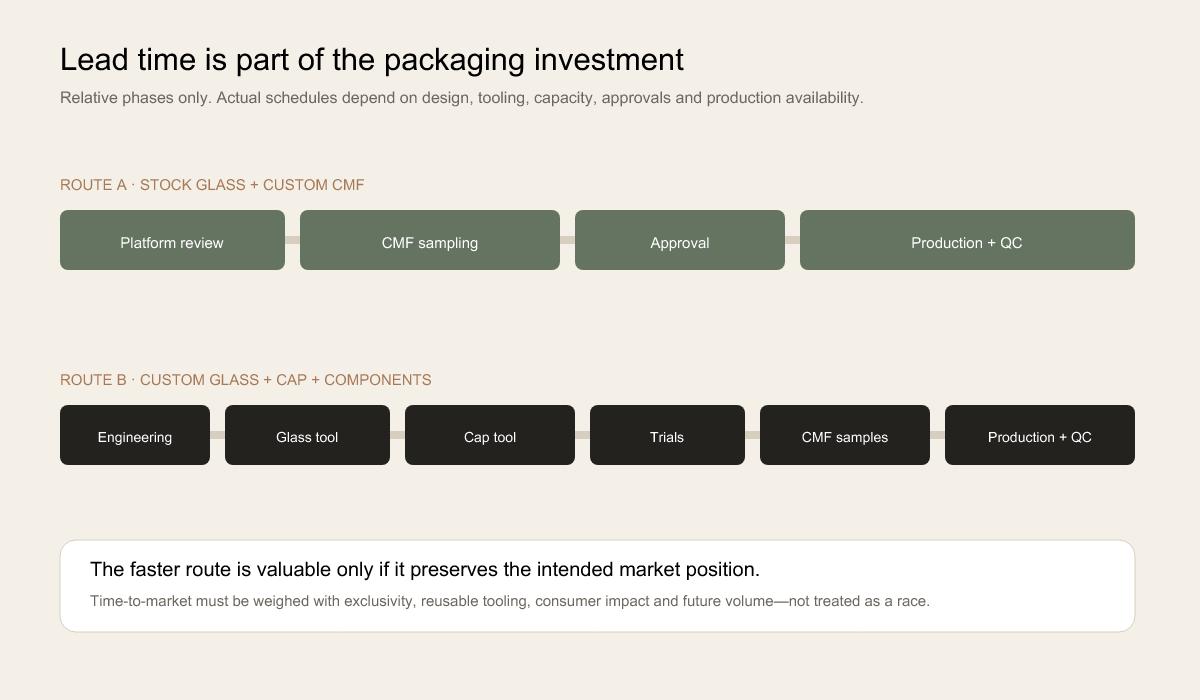
Jalur pengembangan relatif.Diagram ini membandingkan fase, bukan hari kalender; penjadwalan proyek termasuk dalam persamaan nilai. Diagram teknis SVG.
19 · Arsitektur Jangka Panjang
Desain untuk orde pertama—dan orde kelima
Rute produksi termurah pun bisa menjadi rapuh jika bergantung pada stok sementara, pencocokan warna yang tidak terdokumentasi, atau ingatan satu orang tentang proses perakitan. Sebaliknya, investasi peralatan yang tinggi dapat menjadi sia-sia jika hanya menyelesaikan masalah estetika sekali saja tanpa mendukung kapasitas atau variasi aroma di masa mendatang. Arsitektur pengemasan harus ditinjau sebagai sistem komersial yang dapat diulang.
Untuk pesanan berulang, tim membutuhkan gambar yang terkontrol, karya seni, standar warna, master fisik, referensi komponen yang disetujui, instruksi perakitan, dan kepemilikan revisi. Aturan kontinuitas pemasok dan substitusi sangat penting. Jika pompa tidak tersedia, merek harus mengetahui dimensi dan atribut kinerja mana yang kritis sebelum penggantian diusulkan. Jika pelapis dipesan ulang, referensi yang disetujui harus lebih kuat daripada foto dari ponsel.
Perencanaan produksi dievaluasi berdasarkan volume penjualan seumur hidup yang diharapkan, bukan hanya pembelian pertama. Tutup botol khusus yang dapat digunakan untuk lima peluncuran mungkin lebih rasional daripada aksesori eksklusif yang lebih murah yang berubah untuk setiap SKU. Botol yang sudah ada juga dapat menjadi platform jangka panjang jika sistem CMF-nya dikelola dengan cermat. Skalabilitas tidak identik dengan kustomisasi atau stok; skalabilitas berasal dari keputusan yang tetap terkendali.
Kemampuan pengulangan adalah hasil dari desain.
Suatu paket dikatakan dapat diskalakan ketika tampilan dan kinerja yang diinginkan dapat direproduksi tanpa perlu membangun kembali riwayat proyek. Oleh karena itu, dokumentasi dan kesamaan komponen merupakan bagian dari desain premium, meskipun konsumen tidak pernah melihatnya.
Tes orde kelima
Apakah komponen yang disetujui tersebut masih dapat diperoleh?
Apakah master warna dan hasil akhir fisik dikendalikan?
Siapa yang memiliki cetakan, gambar, dan revisi tersebut?
Bisakah wewangian masa depan berbagi komponen fungsional?
Apakah substitusi diatur oleh kinerja dan dimensi?
Apakah komponen yang tersisa masih bisa digunakan?
20 · Modal Kerja
Komponen eksklusif menciptakan risiko inventaris eksklusif.
Jika setiap komponen unik untuk satu wewangian, stok yang tersisa memiliki sedikit peluang untuk mendapatkan nilai di masa depan. Perubahan desain kemasan dapat menyebabkan tutup botol yang dicetak menjadi tidak terpakai. Botol yang direvisi dapat menyebabkan sisipan kemasan menjadi tidak terpakai. Finishing yang dihentikan produksinya dapat menyebabkan pompa yang warnanya tidak lagi sesuai. Biayanya bukan hanya penyimpanan; tetapi juga modal kerja yang terikat pada spesifikasi yang mungkin tidak digunakan oleh merek tersebut.
Kesamaan selektif dapat mengurangi paparan tersebut tanpa menciptakan pengalaman konsumen yang generik. Beberapa wewangian mungkin memiliki platform pompa, sisipan tutup, geometri kerah, atau struktur karton polos yang sama, sementara berbeda dalam lapisan, desain, lapisan luar tutup, atau selongsong. Komponen umum menggabungkan permintaan dan dapat membuat pengisian ulang lebih tangguh. Implikasi multi-SKU tetap harus direncanakan dengan cermat, tetapi tujuan komersial di sini adalah fleksibilitas inventaris daripada koordinasi koleksi.
Merek harus mempertanyakan apakah setiap komponen eksklusif dapat digunakan kembali di masa mendatang untuk kapasitas produksi, edisi terbatas, atau isi ulang, apakah dapat didekorasi di tahap akhir, dan apakah stok netral dapat disimpan sebelum desain akhir. Ini adalah pertanyaan tentang kelayakan, bukan jaminan. Pendekatan yang disukai bergantung pada umur simpan, material, jalur penyelesaian, praktik pemasok, dan kepercayaan terhadap perkiraan.
21 · Arah yang Direkayasa Nilai
Pertahankan persepsi premium; hilangkan kompleksitas yang tidak dapat mempertahankan diri.
Arsitektur akhir yang masuk akal mempertahankan keputusan-keputusan yang paling bernilai bagi konsumen dan menantang keputusan lainnya. Platform kaca yang sudah ada dapat dipertahankan jika evaluasi fisik mengkonfirmasi proporsi, alas, area dekorasi, dan kualitasnya sesuai. Diferensiasi akan beralih ke lapisan akhir asap atau matte yang terkontrol, perlakuan logo yang tepat, tutup yang lebih taktil, dan kemasan karton yang teratur. Platform pompa dan antarmuka tersembunyi akan tetap terbukti dan kompatibel, bukan sesuatu yang baru hanya demi penampilan.
Desain cetakan hanya akan disetujui jika menghasilkan ciri khas yang dapat digunakan kembali—berpotensi berupa tutup atau elemen merek tertentu—sementara keputusan mengenai cetakan kaca dapat dilakukan secara bertahap hingga perkiraan, nilai kepemilikan, dan pentingnya siluet menjadi lebih jelas. Standar warna dan finishing fisik akan menghubungkan kaca, tutup, kerah, dan karton. Kemasan akan ditinjau setelah dirakit, dikemas, dan siap untuk pesanan ulang di masa mendatang, bukan hanya disetujui sebagai sampel terpisah yang menarik.
Arahan ini merupakan kerangka rekomendasi, bukan klaim tentang hasil akhir yang akan dicapai pelanggan. Botol, bahan tutup, dekorasi, karton, jalur pembuatan cetakan, kuantitas, dan penghematan yang terukur yang dipilih pada akhirnya adalah...[CEK FAKTA / DAXIN UNTUK MENGKONFIRMASI]Hasil komersial yang ingin dicapai jelas: anggaran terkonsentrasi di tempat yang dapat dimanfaatkan konsumen, dengan menghilangkan jumlah pesanan minimum (MOQ), persediaan, dan ketergantungan pengembangan yang tidak perlu.
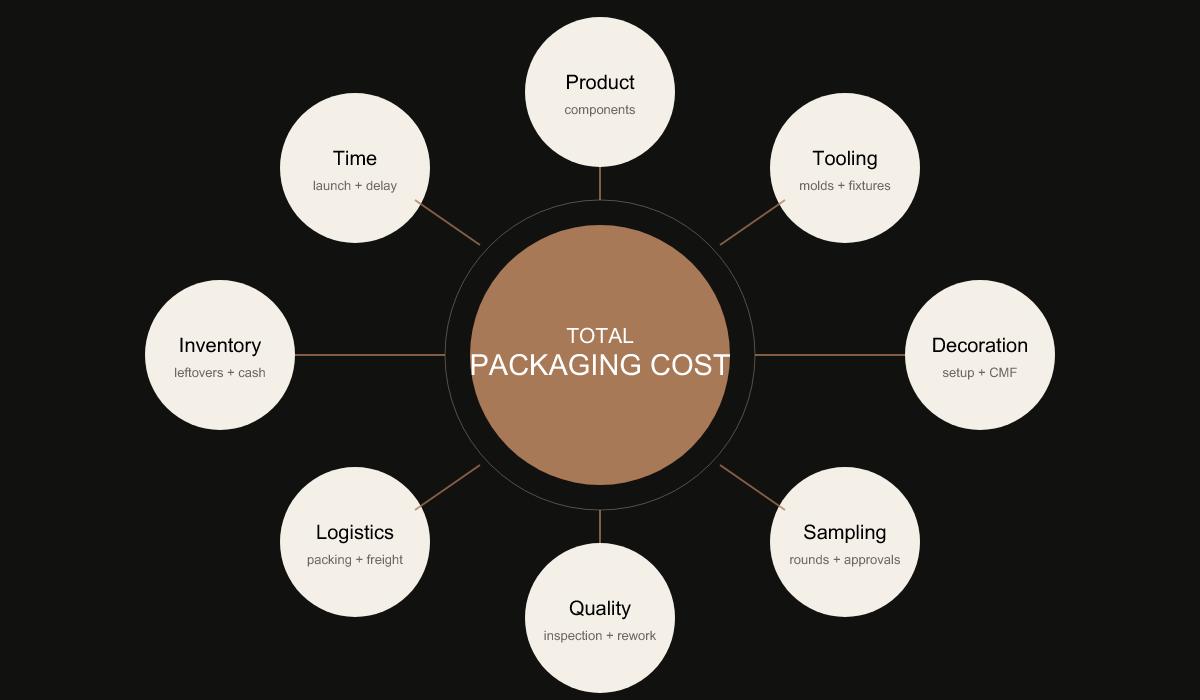
Kerangka biaya pengemasan total.Rute akhir harus masuk akal sebagai produk, sistem pasokan, dan jadwal. Diagram teknis SVG.
22 · Pengendalian Diri yang Disengaja
Apa yang kami pilih untuk tidak disesuaikan—dan mengapa itu merupakan rekomendasi premium.
Studi kasus pemasok biasanya mengagungkan semua hal yang ditambahkan. Rekayasa nilai juga mendokumentasikan apa yang dihilangkan. Komponen internal pompa tidak memerlukan platform eksklusif jika opsi yang terbukti dapat menghasilkan semprotan yang dibutuhkan, sesuai dengan leher yang dipilih, dan tetap tersedia. Mengkustomisasi mekanisme yang tidak terlihat tanpa manfaat pengguna yang jelas akan menciptakan risiko kualifikasi dan penggantian tanpa memperkuat pengakuan.
Leher botol tidak perlu menjadi antarmuka eksklusif jika standar yang kompatibel dapat mendukung arsitektur pompa, kerah, dan tutupnya. Leher botol baru yang tersembunyi di bawah penutup akan mempersulit pengadaan di masa mendatang sekaligus menawarkan sedikit nilai bagi konsumen. Sisipan tersebut tidak perlu dekorasi tersembunyi yang rumit jika fungsi sebenarnya adalah untuk menahan, melindungi, dan menyajikan botol dengan bersih. Anggaran dekorasi harus terlihat saat botol dibuka, bukan tersembunyi setelah produk dikeluarkan.
Cetakan botol baru tidak perlu persetujuan otomatis hanya karena secara teknis memungkinkan. Jika sinyal terkuat merek tersebut adalah ketelitian pada lapisan akhir, tutup, dan grafis, botol kaca baru akan menghabiskan peralatan dan waktu tanpa dampak yang sebanding pada penjualan di toko. Keputusan tersebut dapat ditinjau kembali ketika volume penjualan, bukti permintaan, atau siluet yang benar-benar unik membenarkannya.
Mengatakan “bagian ini tidak memerlukan alat khusus” bukanlah penolakan untuk berinovasi. Itu adalah integritas komersial. Hal ini melindungi anggaran untuk fitur-fitur yang dinikmati konsumen, mengurangi jumlah minimum dan master yang harus dikelola merek, dan memberikan jalur yang lebih jelas untuk pemesanan ulang. Respons pemasok terbaik bukanlah selalu daftar kemampuan terpanjang; melainkan arsitektur yang menjelaskan mengapa setiap kemampuan harus atau tidak harus digunakan.
23 · Pelajaran bagi Pembeli
Sepuluh keputusan yang harus dipertimbangkan merek parfum untuk presentasi selanjutnya.
1. Premium tidak berarti semuanya harus sesuai pesanan.
Konsumen merasakan sebuah objek yang utuh, bukan sekadar kumpulan komponen yang dibuat khusus. Kustomisasi berharga ketika menciptakan pengenalan, sentuhan, fungsi, atau perlindungan; jika tidak, kustomisasi dapat menambah komitmen tanpa menambah kualitas yang dirasakan.
2. Sesuaikan apa yang diperhatikan pelanggan
Urutkan siluet, tutup botol, warna, finishing, logo, dan pengalaman pembukaan berdasarkan perannya dalam merek. Komponen kecil yang sering disentuh mungkin layak mendapat perhatian lebih daripada struktur besar yang tersembunyi.
3. Standarisasi hal-hal yang menjadi dasar sistem tersebut.
Platform leher, pompa, dan sisipan yang telah teruji dapat mengurangi risiko kualifikasi dan pemesanan ulang ketika tidak perlu menampilkan identitas yang terlihat. Standardisasi tetap memerlukan kompatibilitas dan validasi kinerja.
4. Evaluasi MOQ pada tingkat komponen
Catat setiap detail kaca, dekorasi, tutup, pompa, kerah, kotak, dan sisipan secara terpisah. Persyaratan yang paling tidak fleksibel—bukan hanya jumlah botol—seringkali menentukan risiko modal kerja.
5. Berat botol memberikan hasil yang semakin berkurang.
Kualitas dan stabilitas dapat mendukung posisi premium, tetapi lebih banyak kaca juga memengaruhi kekuatan karton, biaya pengiriman, dan penggunaan material. Targetkan berat yang dirasakan dengan tepat, bukan berat fisik maksimum.
6. Dekorasi dapat mengungguli peralatan baru.
Ketika siluet struktural bukanlah aset merek utama, CMF yang terkontrol dan karya seni yang presisi dapat menciptakan perubahan visual yang lebih besar per unit kompleksitas pengembangan. Dekorasi tetap memerlukan persetujuan khusus proses.
7. Harga satuan terendah dapat menghasilkan biaya total tertinggi.
Hitung biaya tambahan untuk pemasok, pengiriman, sampel, inspeksi, perakitan, inventaris, dan pengerjaan ulang. Penghematan komponen harus tetap berlaku sepanjang rantai pasokan sebelum disebut sebagai penghematan.
8. Peralatan adalah bagian dari masa depan, bukan hanya prioritas utama.
Nilai apakah cetakan tersebut menciptakan aset yang dapat digunakan kembali dan dimiliki di berbagai peluncuran yang mungkin terjadi. Alat yang memecahkan satu keputusan penataan gaya sementara mungkin tidak akan pernah mengembalikan kompleksitas operasionalnya.
9. Kompleksitas adalah kategori biaya
Setiap tambahan material, lapisan akhir, pemasok, dan cetakan menciptakan ketergantungan. Pertahankan kompleksitas yang dihargai pelanggan atau yang dibutuhkan oleh rekayasa, dan pertanyakan sisanya sebelum disetujui.
10. Waktu peluncuran produk ke pasar termasuk dalam persamaan nilai.
Rute yang melewatkan jendela ritel atau kampanye dapat berakibat mahal secara komersial meskipun komponen-komponennya menawarkan harga yang baik. Pilih kecepatan, eksklusivitas, dan komitmen terhadap peralatan sesuai dengan konteks peluncuran sebenarnya.

Penyederhanaan yang cerdas tetap harus terlihat premium.Konsep editorial yang dihasilkan ini memvisualisasikan arah desain; ini bukan foto proyek pelanggan yang telah dianonimkan. Visual editorial yang dihasilkan.
Kesimpulannya bukanlah bahwa kemasan standar lebih baik daripada kemasan khusus, ABS lebih baik daripada zamac, atau dekorasi lebih baik daripada cetakan kaca. Melainkan bahwa setiap keputusan harus memiliki tempatnya masing-masing. Kemasan parfum khusus yang baik diciptakan dengan mengetahui secara pasti di mana harus berinvestasi, di mana harus melakukan standardisasi, dan bagaimana setiap pilihan mengubah persepsi merek, jumlah pesanan minimum (MOQ), total biaya, risiko, dan waktu pemasaran.
Pertanyaan Pembeli
Pertanyaan yang Sering Diajukan (FAQ) tentang rekayasa nilai kemasan parfum:
T: Apakah cetakan botol parfum khusus selalu diperlukan?
A: Tidak. Cetakan khusus masuk akal jika geometri eksklusif menciptakan nilai merek yang tahan lama dan perkiraan mendukung pembuatan perkakas, validasi, dan komitmen pesanan minimum. Jika siluet bukan aset pengenalan utama, platform kaca yang sudah ada dengan warna, lapisan akhir, dekorasi, tutup, dan karton khusus dapat lebih tepat secara komersial.
T: Bagaimana cara membuat botol parfum standar terlihat unik?
A: Perlakukan botol standar sebagai platform struktural yang telah teruji, kemudian bangun identitas melalui sistem CMF yang terkoordinasi: lapisan atau transparansi, desain yang presisi, tutup yang khas, detail metalik yang terkontrol, dan pengalaman membuka kemasan karton. Kompatibilitas, batasan dekorasi, dan jumlah minimum masih perlu divalidasi secara fisik.
T: Apa yang biasanya menentukan jumlah pesanan minimum (MOQ) untuk paket parfum lengkap?
A: Kemasan jarang memiliki jumlah pesanan minimum (MOQ) yang tunggal. Ketersediaan kaca, ukuran batch dekorasi, produksi tutup, pasokan pompa, pencetakan karton, dan struktur sisipan masing-masing dapat memiliki kendala yang berbeda. Persyaratan komponen yang paling fleksibel atau paling tidak fleksibel seringkali menjadi hambatan proyek.
T: Komponen kemasan parfum mana yang paling layak untuk dikustomisasi?
A: Tidak ada pemenang universal. Kandidat terbaik menggabungkan visibilitas atau sentuhan konsumen yang tinggi, potensi pengenalan yang kuat, kemampuan untuk digunakan kembali di pesanan mendatang, dan komitmen perkakas atau MOQ yang proporsional. Untuk satu merek, ini mungkin berupa siluet; untuk merek lain, ini mungkin berupa tutup atau sistem dekorasi.
T: Apakah botol parfum yang lebih berat lebih premium?
A: Bobot tambahan dapat meningkatkan stabilitas, tekstur, dan daya tarik di rak, tetapi keuntungan yang didapat tidak terbatas. Penambahan kaca juga memengaruhi biaya pengiriman, kekuatan karton, beban palet, dan penggunaan material. Targetnya adalah bobot yang tepat sesuai dengan posisi merek yang diinginkan.
T: Mana yang lebih baik untuk tutup parfum: ABS, aluminium, atau zamac?
A: Pemilihan material bergantung pada geometri, target sentuhan, hasil akhir permukaan, kuantitas, anggaran, dan kompatibilitas. ABS menawarkan fleksibilitas desain dan dekorasi, aluminium memberikan lapisan logam yang bersih dengan bobot yang relatif rendah, dan zamac dapat memberikan kepadatan dan bentuk pahatan dengan implikasi perkakas dan logistik yang lebih besar.
T: Bisakah dekorasi khusus menggantikan pembuatan cetakan botol khusus?
A: Dekorasi dapat menciptakan perubahan visual yang signifikan tanpa mengubah geometri kaca, terutama jika warna, transparansi, cetakan, lapisan foil, dan finishing tutupnya diselaraskan. Namun, dekorasi tidak dapat menciptakan siluet eksklusif atau mengatasi area dekorasi yang tidak sesuai, sehingga jawabannya bergantung pada apa yang perlu dimiliki oleh merek tersebut.
T: Mengapa botol termurah tidak selalu merupakan solusi pengemasan yang paling murah?
A: Harga komponen yang rendah dapat menimbulkan risiko pemasok lain, pergerakan pengiriman, siklus sampel, inspeksi, serah terima perakitan, persediaan, atau kompatibilitas. Membandingkan total biaya proyek akan mengungkapkan apakah harga yang lebih rendah tersebut masih berlaku setelah memperhitungkan koordinasi, pengerjaan ulang, dan waktu.
T: Bagaimana seharusnya merek parfum rintisan mengalokasikan anggaran pengemasannya?
A: Pertama, lindungi pengiriman dan kompatibilitas, kemudian identifikasi beberapa keputusan yang terlihat atau terasa yang menciptakan pengenalan. Gunakan platform yang terbukti di mana eksklusivitas memiliki sedikit nilai bagi konsumen, uji permintaan sebelum komitmen besar terhadap peralatan produksi, dan simpan file dan master yang terkontrol untuk pemesanan ulang.
T: Bagaimana merek dapat mengurangi waktu tunggu pengemasan parfum?
A: Kurangi peralatan yang tidak perlu, pilih platform yang kompatibel dan tersedia, tetapkan antarmuka kritis sejak dini, uji kondisi berisiko tinggi yang representatif terlebih dahulu, dan hindari perubahan CMF atau desain grafis di akhir proses. Jadwal berbasis ketergantungan lebih bermanfaat daripada durasi tunggal yang dijanjikan.
T: Bagaimana seharusnya investasi peralatan dievaluasi?
A: Evaluasilah dampak terhadap konsumen, nilai eksklusivitas, volume yang diharapkan di masa mendatang, kemampuan untuk menggunakan kembali alat tersebut, risiko teknis, jalur validasi, efek waktu tunggu, dan konsekuensi inventaris. Pembuatan alat harus mendukung aset merek yang dapat diulang, bukan hanya membuktikan bahwa suatu bagian dapat dibuat.
T: Informasi apa yang dibutuhkan DAXIN untuk mengevaluasi proyek pengemasan parfum?
A: Bagikan informasi mengenai kapasitas botol, perkiraan kuantitas, target pasar, kisaran harga target, kemasan referensi, bentuk yang disukai, arah tutup dan pompa, ide dekorasi, status desain, jadwal peluncuran, dan kendala jalur pengisian. Hal-hal yang belum terselesaikan dapat diidentifikasi selama tinjauan arsitektur.